

2021 - Normandy
My journey through Normandy in 2021 took me from the streets and cathedral of Bayeux to the cliffs of Étretat and the coast marked by the D-Day landings.
These photographs bring together the different sides of that journey: architecture, open sea, coastal landscapes and places of remembrance. Along this stretch of France, the beauty of the surroundings sits close to the traces of war.
Bayeux
Bayeux gathers much of its history around the cathedral, whose towers rise above the rooftops of the old town. Stone façades, narrow streets and small squares surround the building, connecting its monumental scale with the ordinary life of the town. The cathedral is visible from different corners of Bayeux, but its details become clearer as you approach: figures around the entrances, carved stonework and the layers left by centuries of construction.
Inside, the eye follows the columns towards the vaults before returning to the smaller details. Stained glass brings colour into the stone interior, while the changing light reveals the depth of the arches and the texture of their surfaces. The photographs move between these wider views and closer observations, giving space both to the architecture and to the craftsmanship within it.
There is a quietness here that invites a slower pace. Beyond the scale of the building, it is the accumulation of details that holds the attention: a carving, a window, the meeting of light and shadow along a wall. Each offers another way of looking at a place shaped over generations.
Outside, cafés, shops and conversations bring the streets back into focus. The cathedral remains part of that everyday setting, standing above a town whose history is still woven into the places where people live, work and meet.
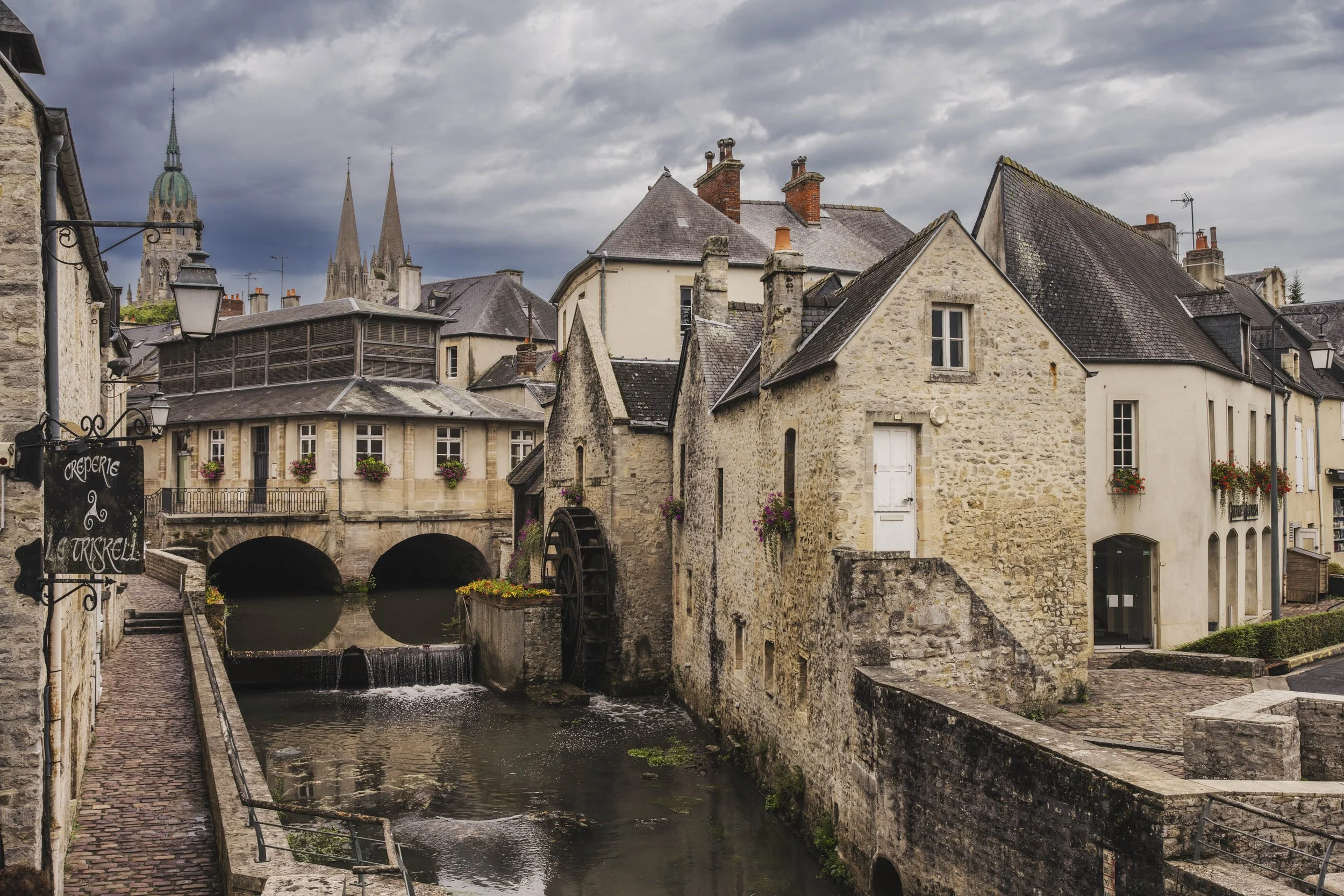
Bayeux

Bayeux

Cathédrale Notre-Dame de Bayeux

Cathédrale Notre-Dame de Bayeux

Cathédrale Notre-Dame de Bayeux

Cathédrale Notre-Dame de Bayeux

Cathédrale Notre-Dame de Bayeux

Cathédrale Notre-Dame de Bayeux

Cathédrale Notre-Dame de Bayeux

Cathédrale Notre-Dame de Bayeux
Arromanches-les-Bains
At Arromanches-les-Bains, the remains of the Mulberry harbour sit just offshore, visible from the beach and the waterfront. Their weathered concrete forms interrupt the line of the sea. Built to bring troops, vehicles and supplies ashore after the D-Day landings, they remain a physical link to the Normandy campaign of 1944.
Seen from the shore, the structures give a sense of the scale of that undertaking. Their purpose was practical and urgent: to create a harbour where one was needed, supporting the Allied advance inland. Today, they have become part of the coastal landscape, surrounded by water and exposed to the changing weather of the English Channel.
The town offers other ways to understand that history, including the Musée du Débarquement and the Arromanches 360 cinema. Out on the beach, however, the remains themselves are enough to make the past feel close. The distance between the waterfront and the concrete blocks becomes a space in which to imagine the activity that once filled this stretch of sea.
Alongside that memory, Arromanches continues its life as a seaside town. People walk along the shore, stop at cafés and look out across the water. These photographs bring together the open landscape, the town and the harbour remains, allowing the calm of the present and the weight of the past to occupy the same view.

Arromanches-les-Bains

Arromanches-les-Bains

Arromanches-les-Bains


Arromanches-les-Bains

Arromanches-les-Bains


Arromanches-les-Bains

Étretat
At Étretat, the white chalk cliffs rise sharply from the English Channel, forming arches, steep walls and the slender rock known as the Aiguille. Seen together, they give the coastline its familiar outline. Yet their appearance changes with the viewpoint: an opening becomes wider, a pillar separates from the cliff behind it, and another stretch of coast comes into view.
From the paths above, the scale of the landscape becomes clearer. The sea extends beyond the cliffs, while the folds and irregular edges of the rock draw the eye along the shore. The Manneporte and the other arches belong to this same coastline, shaped over time by erosion and still exposed to the sea and weather.
Light makes a considerable difference to the photographs. On the pale rock, even a change in shadow can reveal a ridge or deepen an opening. The water provides a shifting background, sometimes setting the cliffs into sharp relief, sometimes bringing their tones closer together. Returning to the same formation from another angle produces a different sense of its shape and size.
Among these broad views are the gulls that inhabit the coast. Their presence brings another scale to the series: individual birds against the water, or perched near the cliffs that dominate the wider photographs. Étretat leaves room for both kinds of attention, from the sweep of the coastline to the life moving through it.

European herring gull - Larus argentatus

Étretat
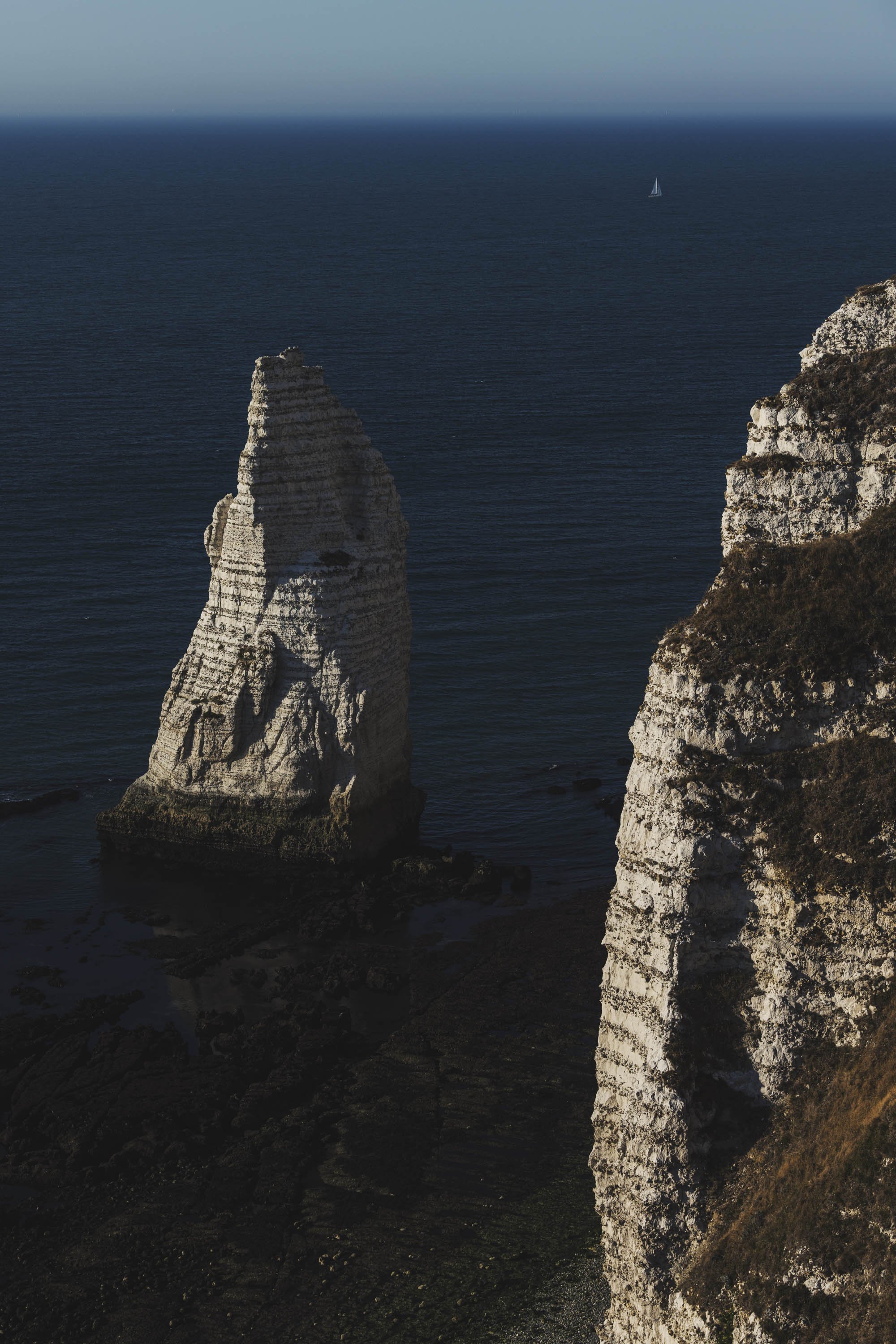
Étretat, Needle Rock

European herring gull - Larus argentatus

Seagull

Étretat

European herring gull - Larus argentatus

Étretat

Étretat

Étretat

Étretat


The cliffs of Étretat
Normandy American Cemetery and Memorial
At Colleville-sur-Mer, the Normandy American Cemetery overlooks Omaha Beach and the English Channel. Across the carefully maintained grounds, rows of white marble crosses and Stars of David extend into the distance. Their order is striking, especially when set against the violence and confusion of the fighting that brought so many lives to an end.
Walking among the graves brings the scale of that loss into a more personal focus. A name, a date, an inscription: each marker asks us to consider an individual life. Some of those buried here were barely out of their teens. Behind the military history are families, friendships and futures that were cut short, and no wide view of the cemetery can fully express what each loss meant.
The chapel and memorial offer further places to pause. The visitor centre provides historical context, but the grounds themselves leave room for a quieter kind of reflection. There is no need to hurry from one point to another. Taking time to read a marker or stand among the rows is part of understanding why this place matters.
The photographs follow the symmetry of the cemetery and the repeated white forms against the landscape. That repetition gives some sense of the number of people remembered here, while the individual markers bring attention back to the person.
For me, remembrance also carries a responsibility. Honouring those who died means considering the human cost of war, beyond dates and military achievements. The peace of these grounds does not erase what happened. It gives us a place to acknowledge the sacrifice, and to reflect on the kind of world we want to build.

Normandy American Cemetery And Memorial

Normandy American Cemetery And Memorial

Normandy American Cemetery And Memorial

Normandy American Cemetery And Memorial

Normandy American Cemetery And Memorial

Normandy American Cemetery And Memorial

Pointe du Hoc Memorial
At Pointe du Hoc, the ground still bears the marks of battle. Craters break up the grass, while damaged bunkers and gun emplacements stand above the English Channel. The sea opens out beyond them, making the remains on the clifftop all the more striking. What happened here is still visible in the shape of the landscape.
On 6 June 1944, American Rangers scaled these cliffs under fire to seize the German position. Looking at the height of the rock and the exposed approach from the sea gives a sense of the difficulty they faced. Knowing the history is one thing; standing beside the cliff adds a physical dimension that words and dates alone cannot provide.
Among the concrete remains, attention moves from the wider site to smaller details: an opening in a bunker, a broken edge, the depth of a crater. These are traces of destruction that have remained long after the fighting ended. The memorial honours the Rangers whose actions made this place part of the history of D-Day, while the surrounding ground bears witness to the conditions in which they fought.
Photographing a place like this means giving those traces space. The views of the sea belong to the same landscape as the damaged defences, and the quiet of the present cannot be separated entirely from what happened here.
This is where the journey becomes a reflection on courage, sacrifice and loss. Remembering the men who fought on these cliffs also means remembering that each had a life beyond the battle. I want these photographs to hold something of that thought: gratitude for those who gave their lives, and a reason to keep working towards a more peaceful world.
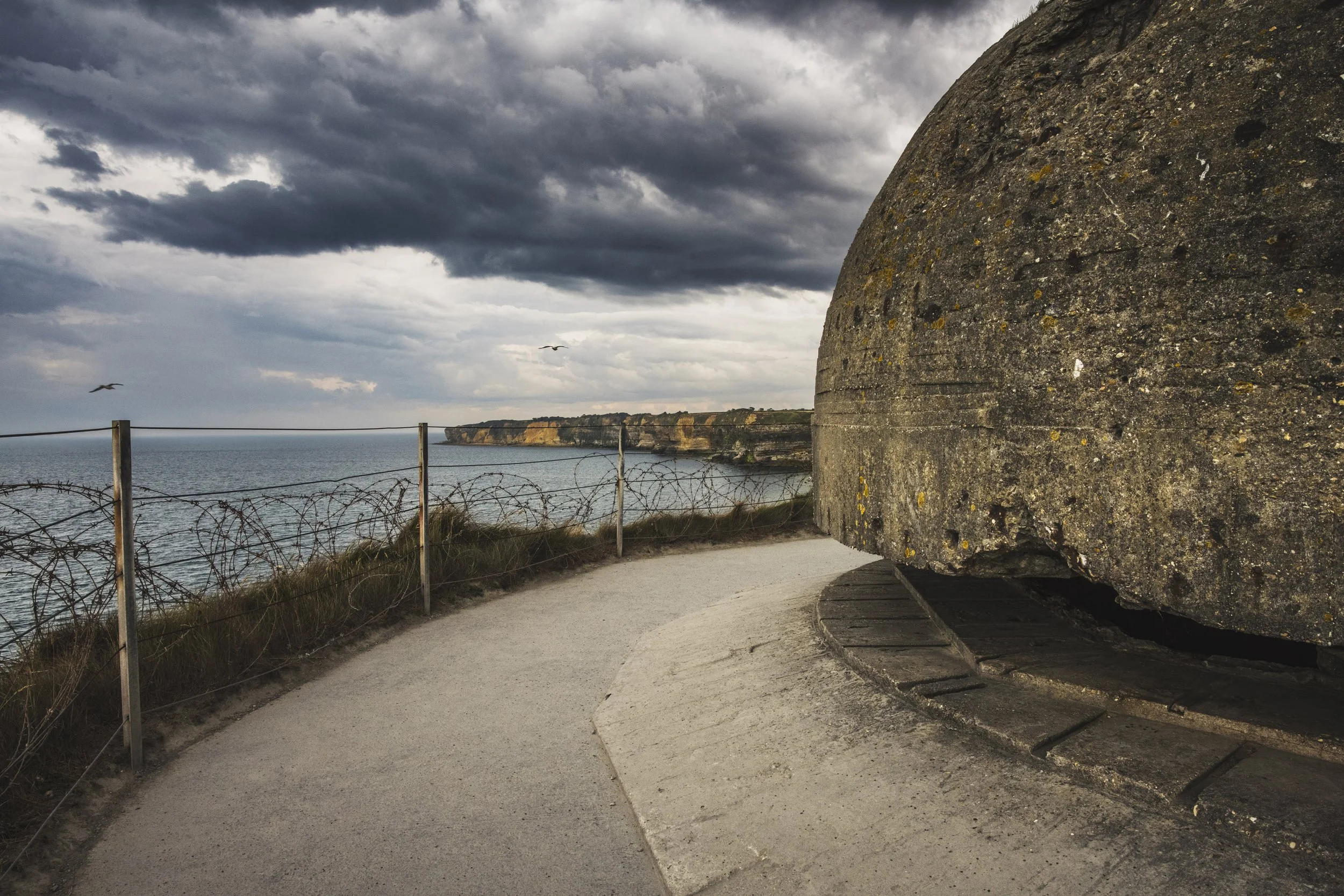
Pointe Du Hoc Memorial
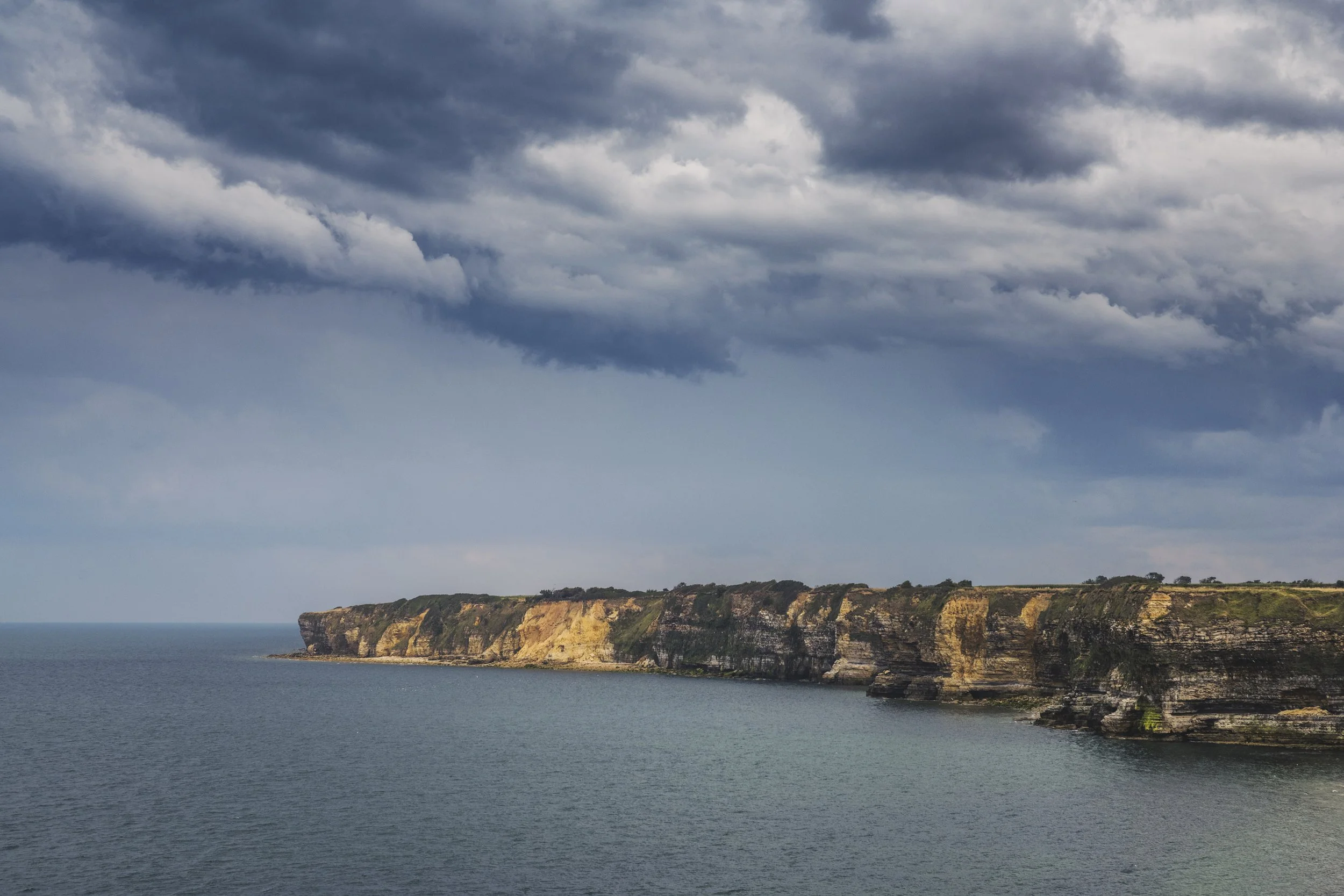
Pointe Du Hoc Memorial

Pointe Du Hoc Memorial