

2016 - Wild Albania
Sometimes a journey begins with a question. In September 2016, I received a request to use one of my photographs of flamingos, taken in the Camargue, to promote a natural area in Albania.
I wondered why a photograph from France was needed to represent somewhere else. The answer was straightforward: there were no suitable photographs available of the Albanian location.
“Why don’t I go there and photograph it?” I suggested.
That conversation became a first trip, followed by a second. What began as a request for an existing image turned into a project documenting Albania’s natural areas, from coastal lagoons and birdlife to the forests and mountain landscapes above the sea.
The photographs below follow that work through Narta Lagoon, Karaburun and Orikum, Llogara and Divjakë-Karavasta. They include the wider landscapes, the animals encountered along the way and the people who helped me explore these places.
The original question stayed relevant throughout: how do you represent a place if you have not seen it? This project began with the opportunity to go there, look closely and make photographs that belonged to the landscape they were intended to describe.
Project developed in partnership with IUCN.org
Narta Lagoon
Narta Lagoon lies near Vlorë, on Albania’s southwestern coast. Its shallow waters and surrounding wetlands provide important habitat for waterbirds, with the lagoon used for feeding, resting and as a stop during migration.
The landscape is open and low, with long views across the water. Dunes and vegetation mark its edges, while the mountains remain further away on the horizon. A bird can appear small within that space, yet become the point around which the whole photograph is composed.
The series also includes details from the shore: shells, sand and the remains of a bunker. Together, they place the birdlife within a landscape that carries natural and human traces. There is more here than a single view of the lagoon.
Towards sunset, the light changes the water and the shapes along its edge. These wider photographs sit alongside closer observations, building a record of Narta as both a habitat and a place with its own particular features.
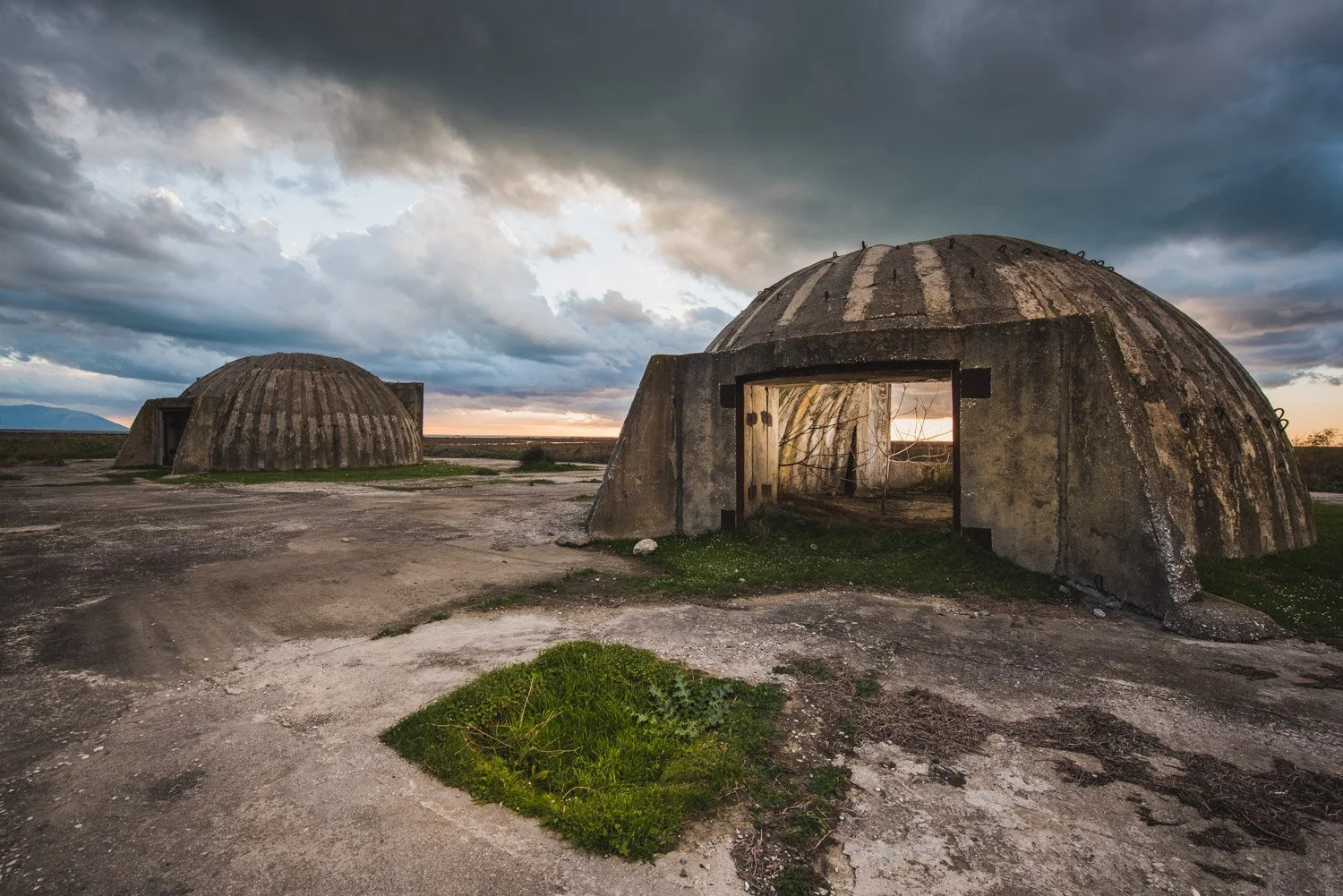
Bunker at Lagoon of Narta

Shell at Lagoon of Narta
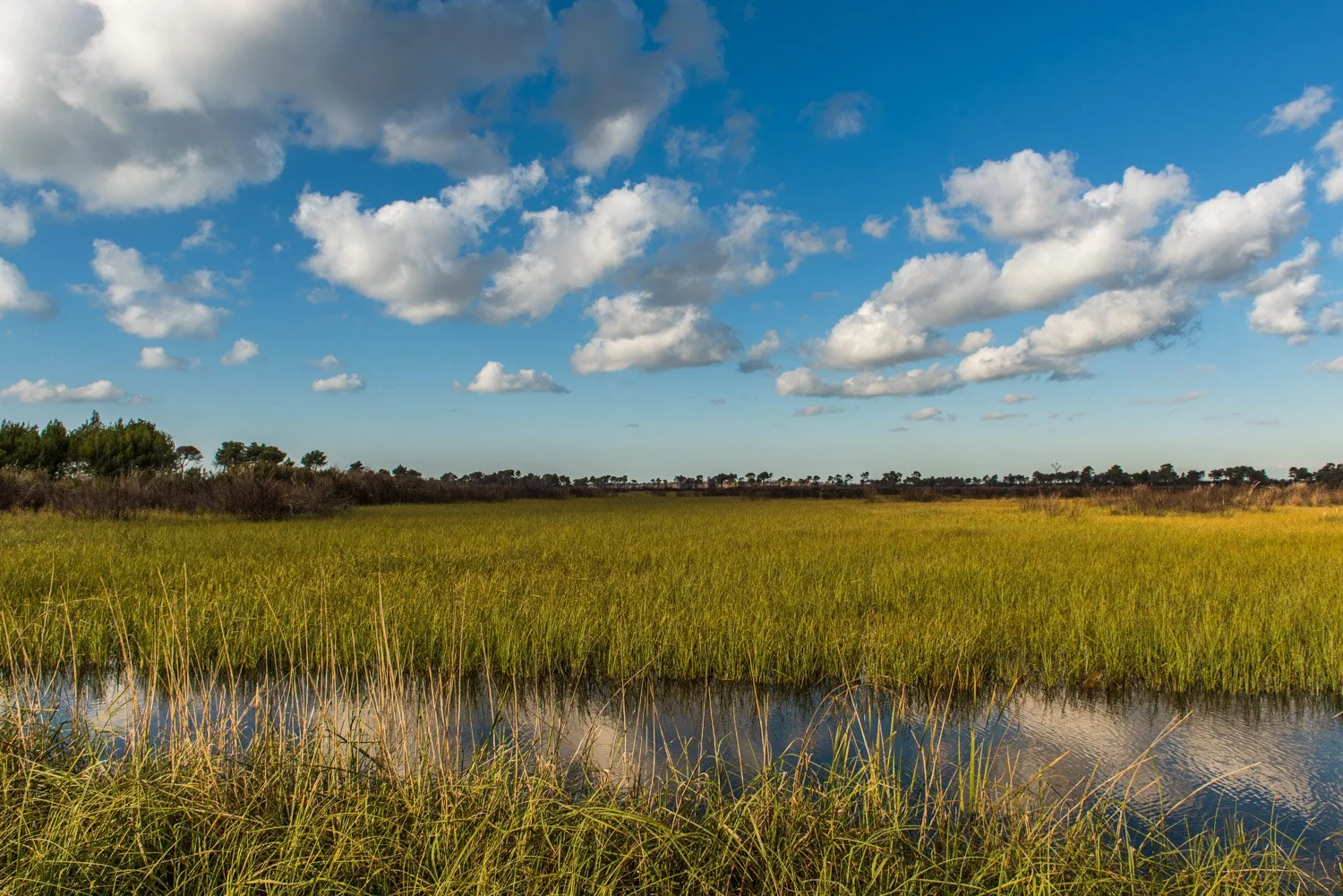
Lagoon of Narta
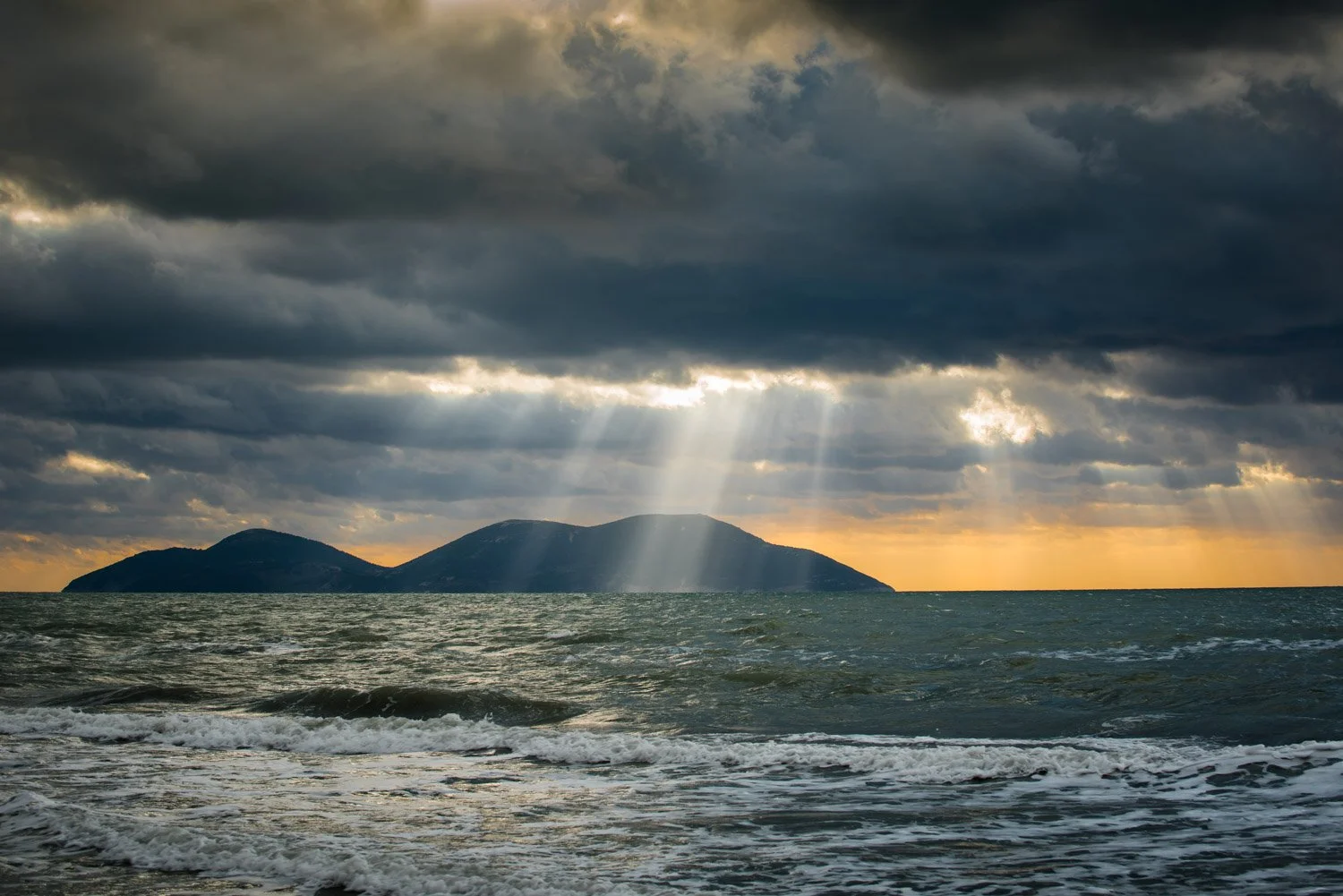
Sunset at Lagoon of Narta

Gull at Lagoon of Narta

Dunes at Lagoon of Narta
Karaburun Peninsula and Orikum Lagoon
Karaburun and Orikum bring together two very different coastal settings around the Bay of Vlorë. The peninsula has steep rocky shores and sea caves; the lagoon at Orikum is lower and more sheltered, with shallow water and vegetation along its margins.
Along Karaburun, the coast is defined by the meeting of rock and open sea. The entrance to Haxhi Ali Cave gives a sense of the scale of the cliffs, while the changing surface of the water reflects light back towards the stone. Views of the peninsula place these details within a longer stretch of coastline.
At Orikum Lagoon, the view becomes quieter and more horizontal. Birds occupy the shallows and the edges of the water, with the surrounding hills forming a backdrop. Moving between these environments reveals how varied the coast can be within a relatively small area.
This part of the project also includes Baci, my guide. His portrait belongs alongside the landscapes: the people who helped me explore the area were part of the work and of the journey itself.
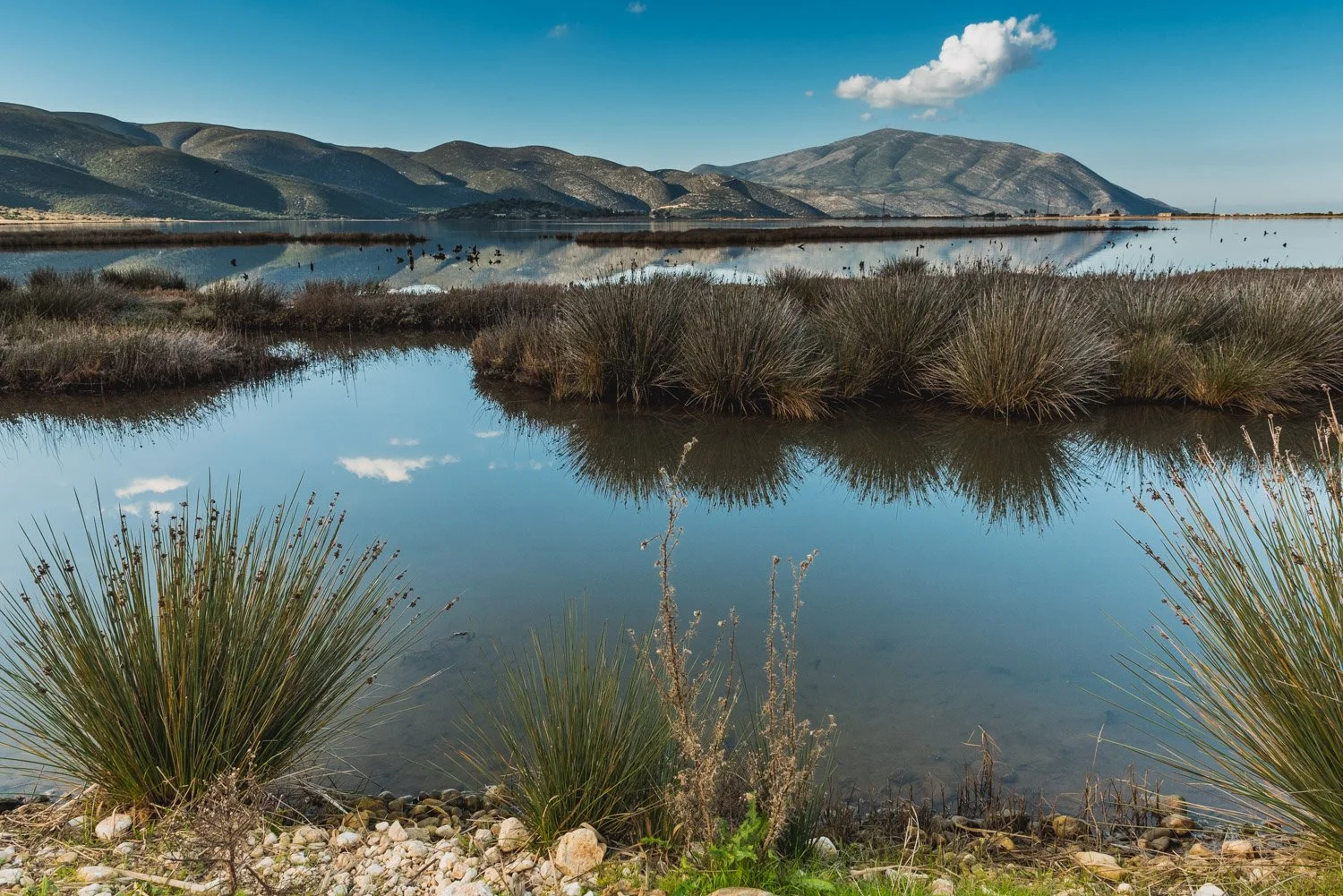
Laguna e Pashalimanit
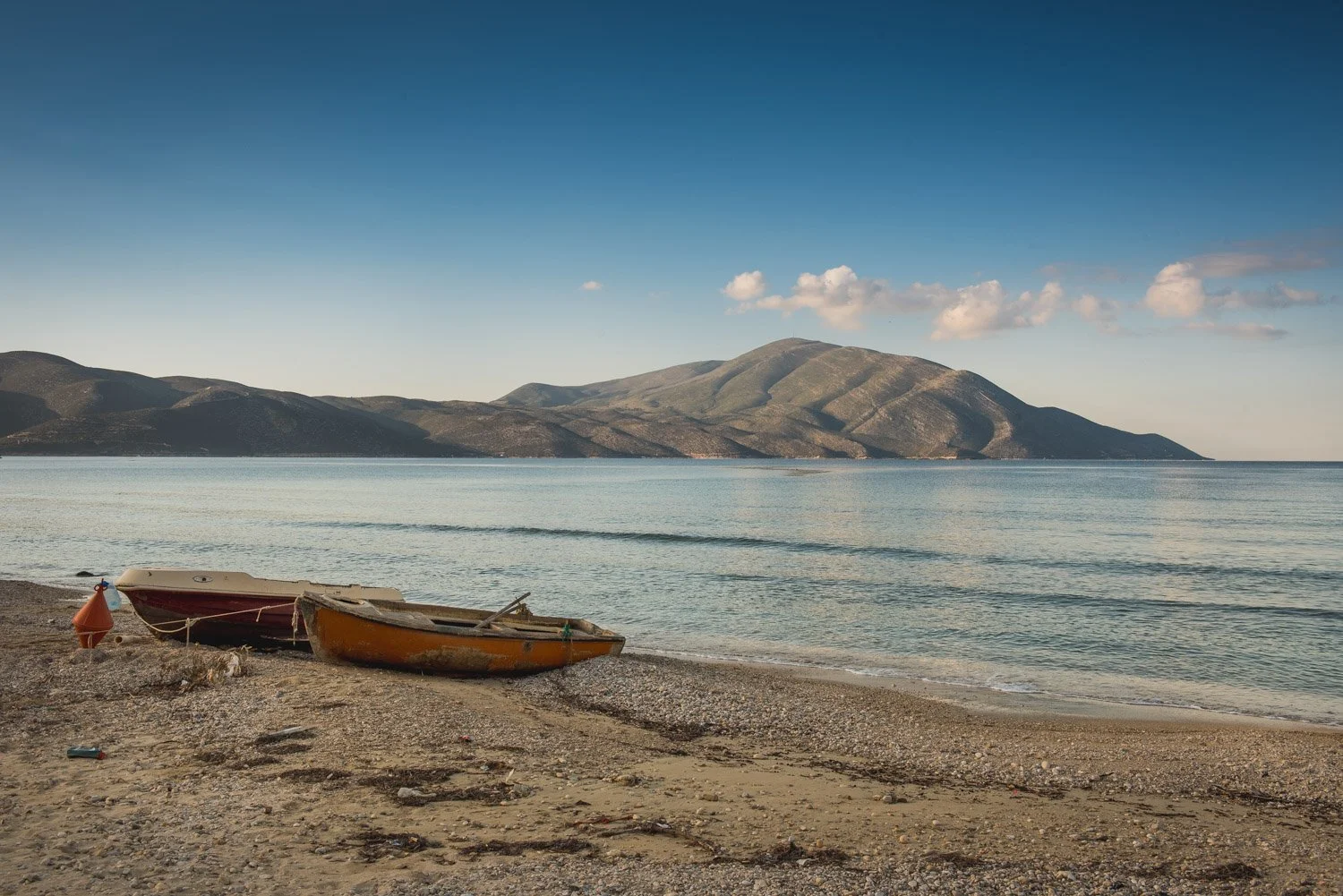
Karaburun view

Common Gull

Haxhi Alia Cave

Baci the guide

Grey Heron
Llogara National Park
Above the coast, Llogara introduces a different landscape. Forest covers the mountain slopes, and views towards the sea appear between areas of dense woodland. The change from the open lagoons is immediate: trunks, branches and foliage divide the space into smaller, overlapping scenes.
The photographs here include those closer details. Ivy climbs through the trees, moss covers surfaces, and a mushroom grows from wood. Each is part of the forest’s structure, easy to overlook when attention is directed towards the broader landscape.
Further views bring the mountains and coast back together. From this height, the sea provides a distant reference beyond the wooded slopes, showing the connection between places that feel quite different when visited on the ground.
A photograph of my guide with his mule records another part of the experience. Alongside the woodland and coastal views, it keeps a human presence within this section of the project: a reminder of the practical work of moving through a landscape, and of the people who helped make that possible.

Ivy

Mushroom on a tree
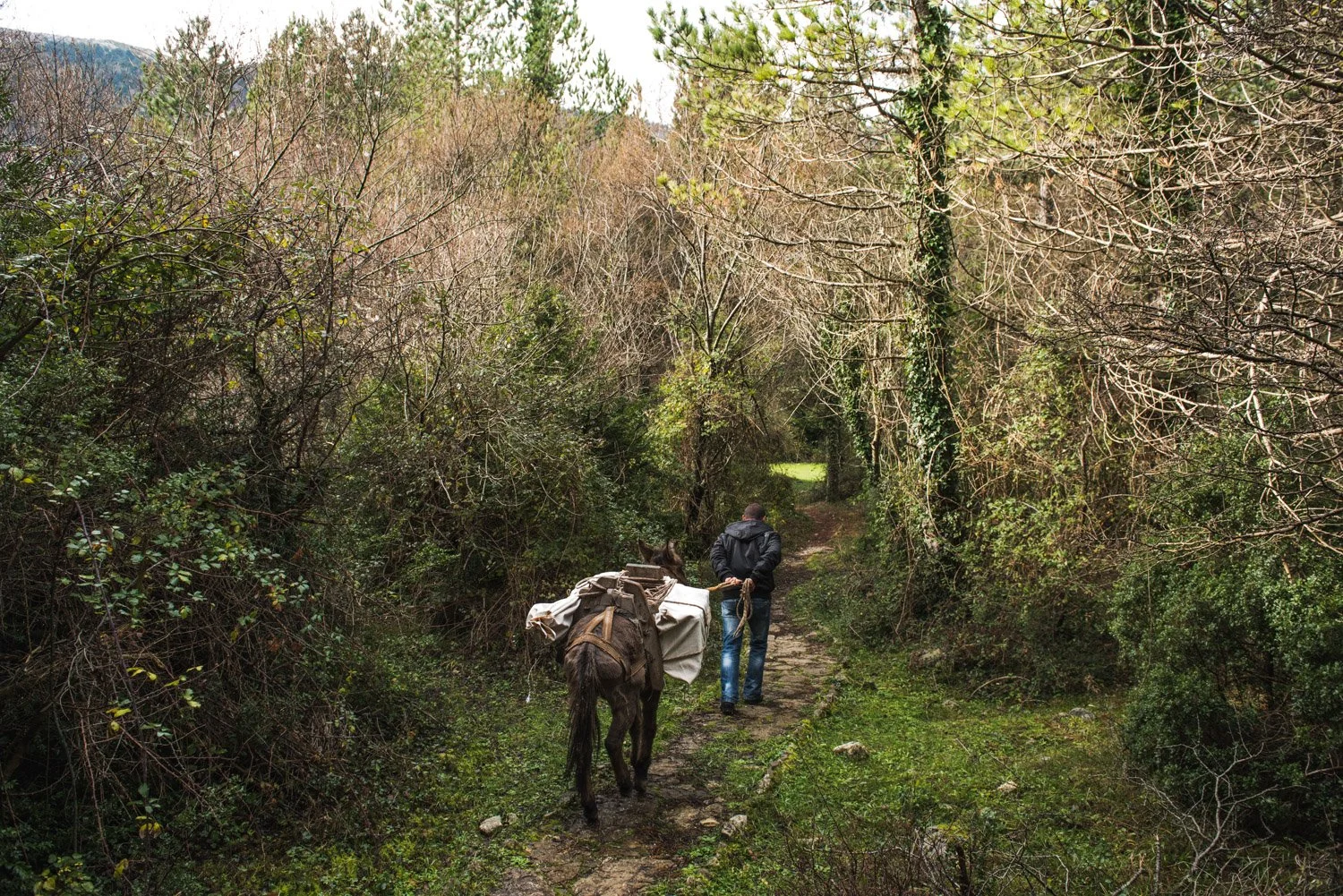
My guide and his mule

Forest of Llogara

Forest of Llogara
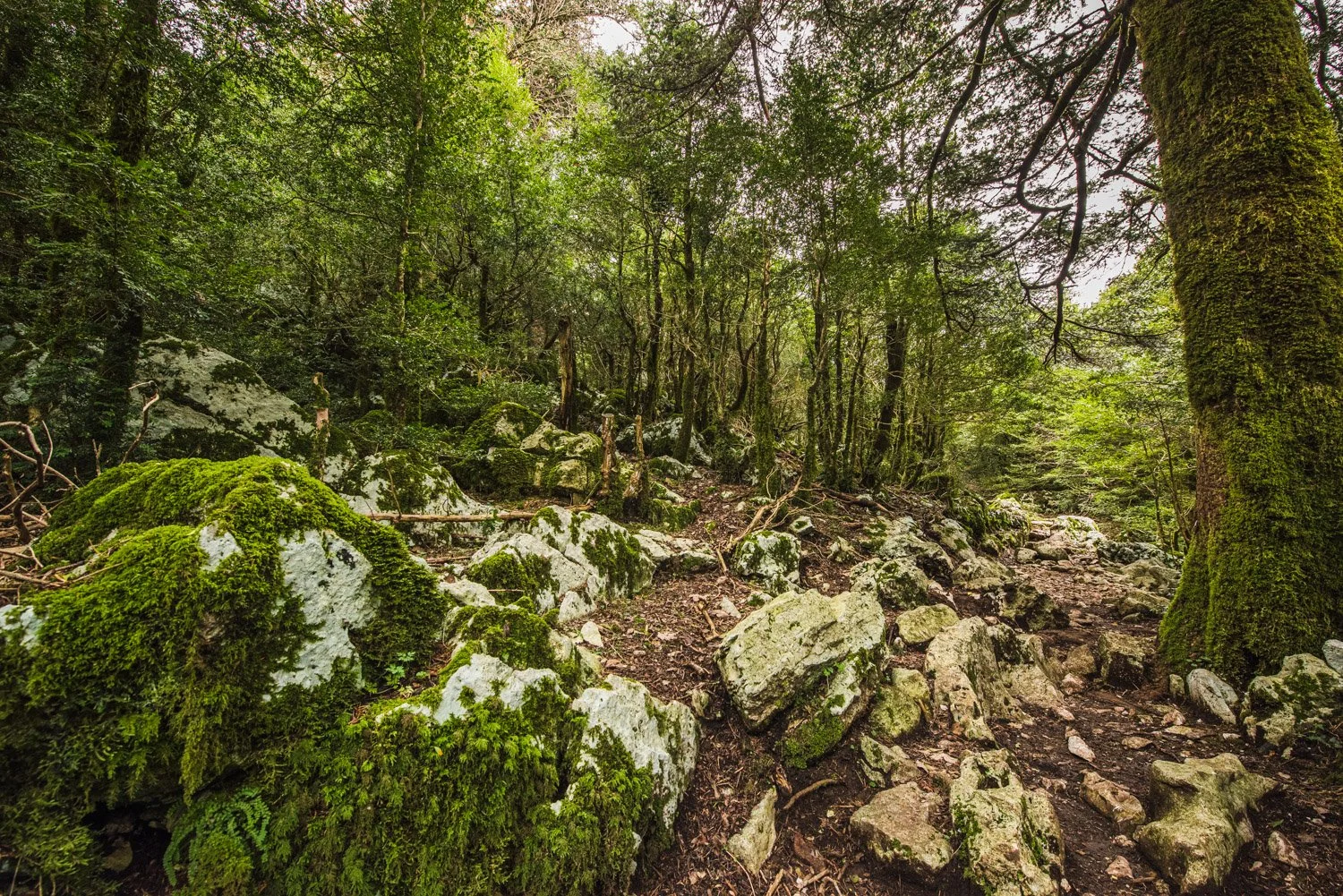
Forest of Llogara

Llogara

Sea view from Llogara

Moss of Llogara
Divjakë-Karavasta National Park
Divjakë-Karavasta brings together lagoon waters, wetlands and coastal woodland on Albania’s Adriatic coast. It is an important place for birdlife, particularly the Dalmatian pelican, whose large bill and broad wings make it a distinctive presence on the water.
The photographs include pelicans, flamingos, egrets and other birds, seen both individually and in groups. Their different shapes and ways of moving give variety to a landscape that can initially seem spare: a stretch of water, a low shoreline and an open sky.
Looking more closely reveals how much activity that space contains. Birds gather along the edges, stand in the shallows or cross the view in flight. Wider compositions show the habitat around them, while closer photographs give attention to plumage, posture and the differences between species.
Evening light brings another change. Pelicans and egrets become darker shapes against the water, and reflections become part of the scene. The sunset photographs close this section of the project with the same birds seen in a different light, still within the wetland that supports them.

Lagoon of Divjakë

Dalmatian pelican

Hooded crow

Greater flamingo
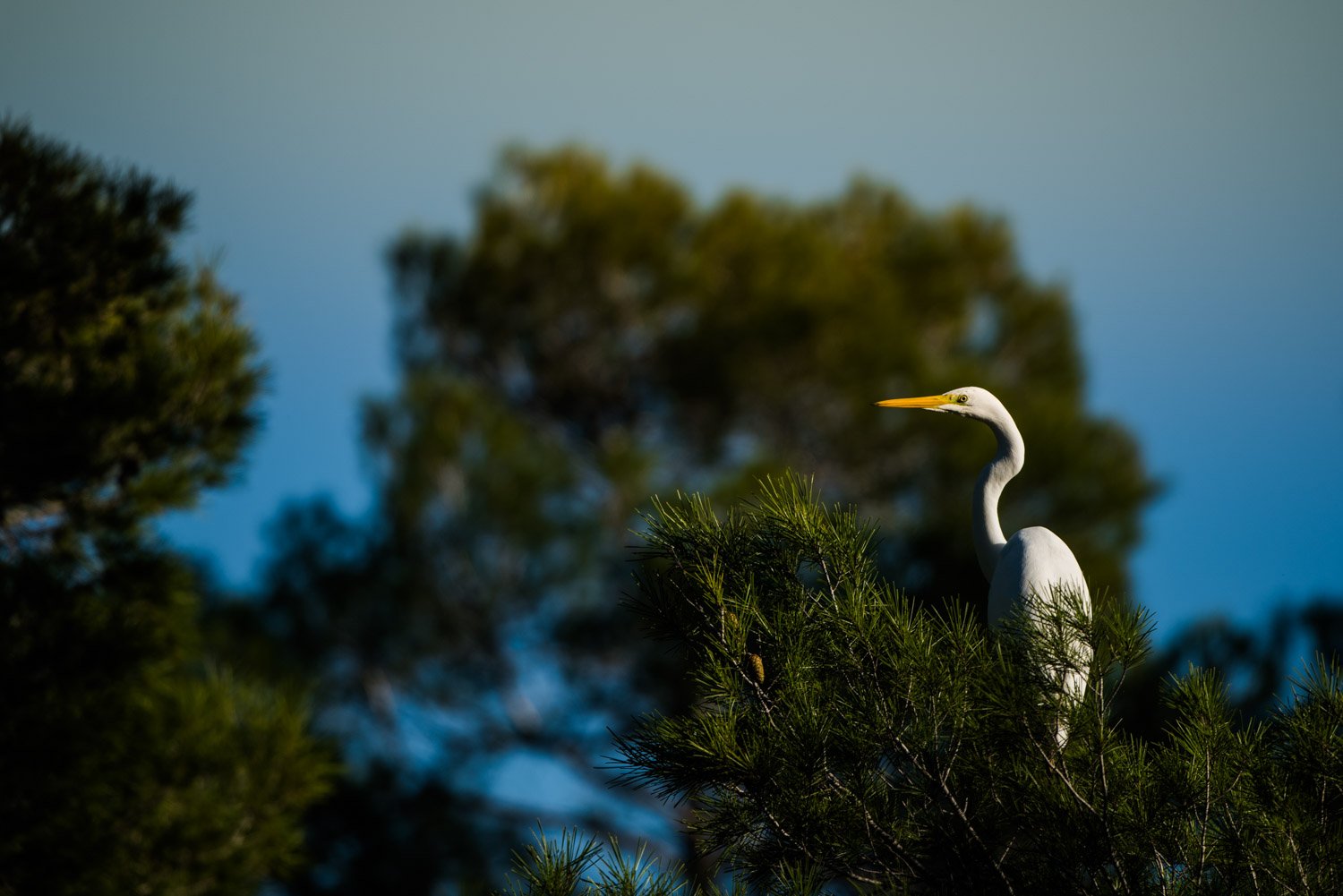
Great egret

Dalmatian pelican

Dalmatian pelican
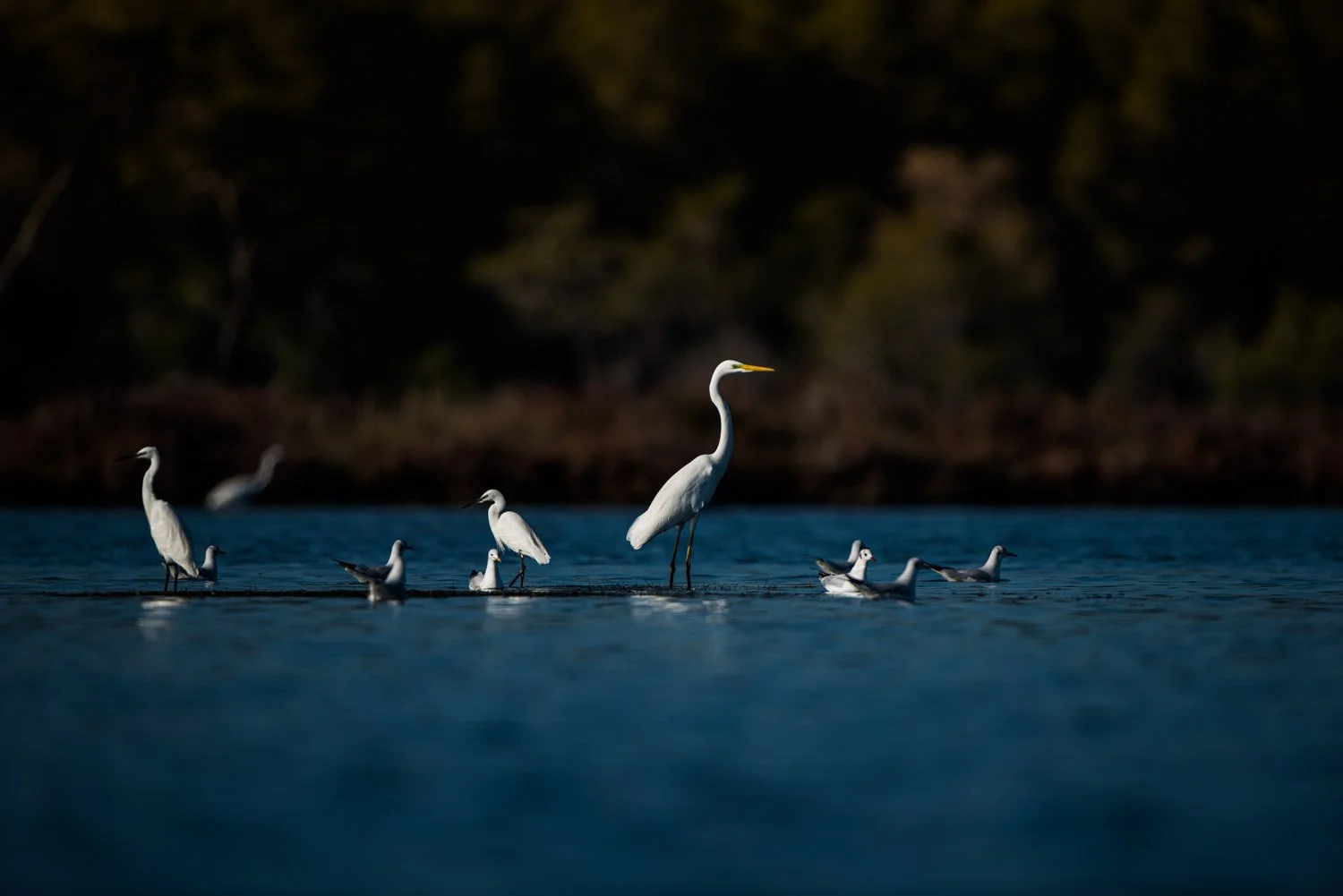
Egret and gulls
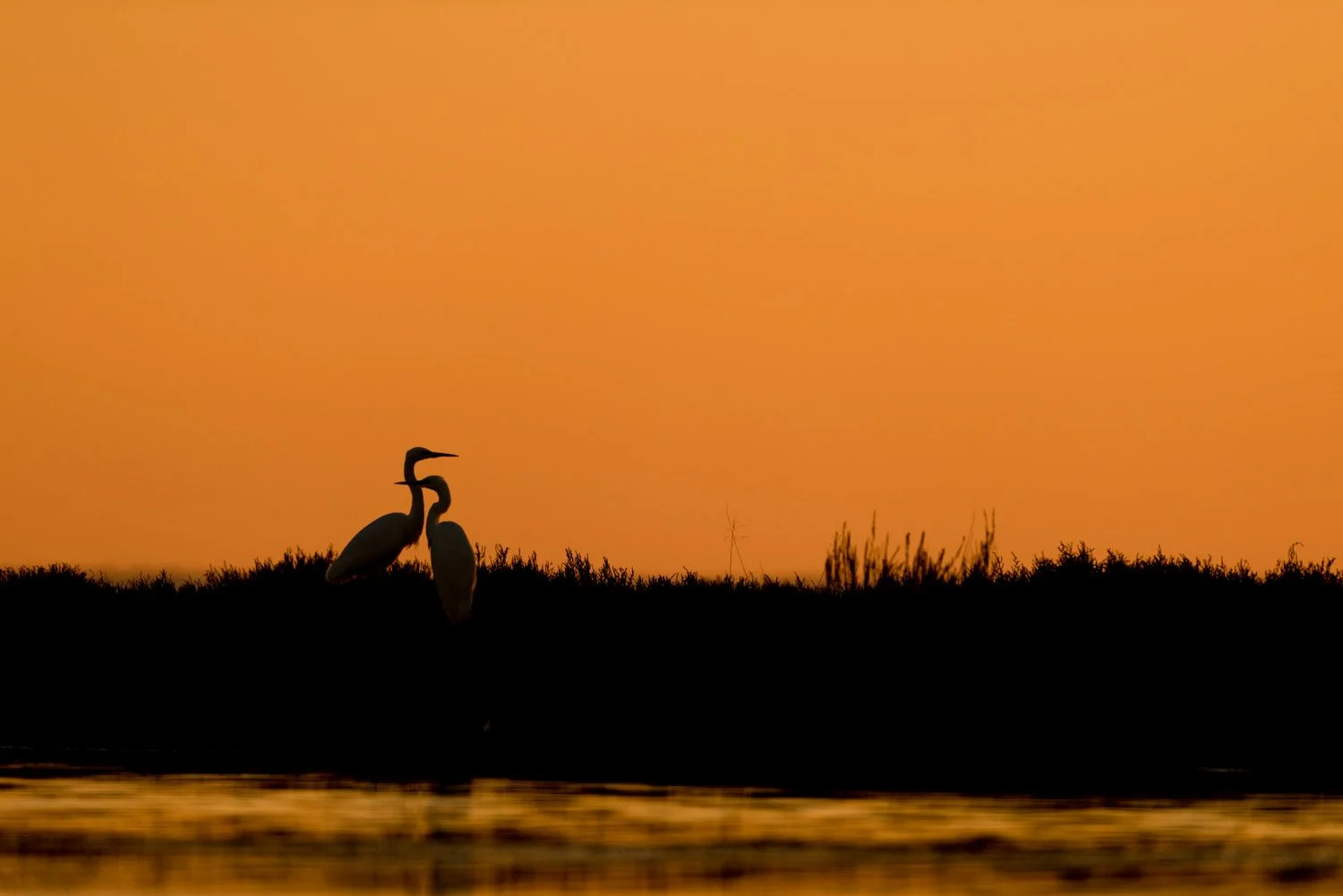
Great egrets at sunset

Dalmatian pelicans at sunset
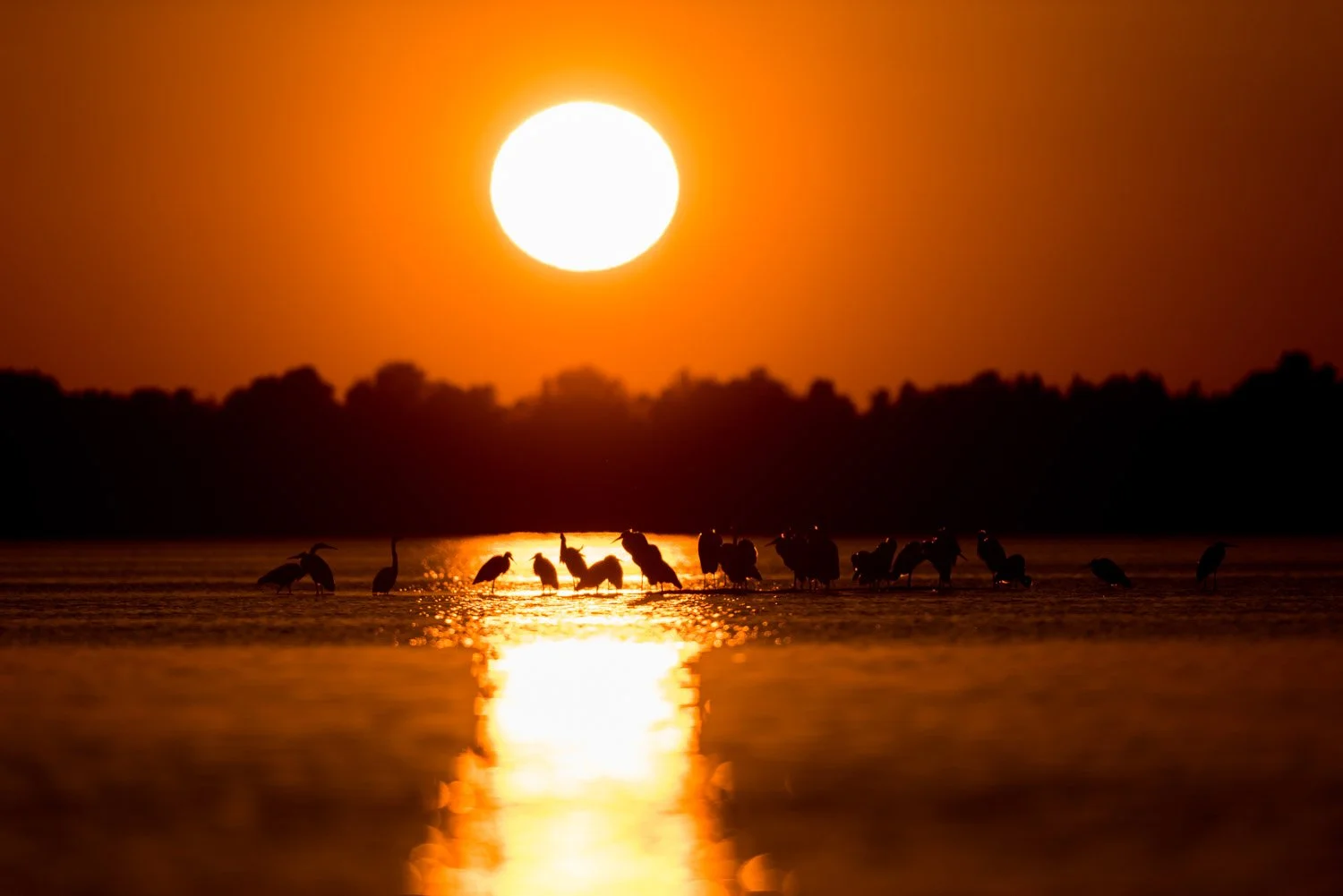
Sunset in Divjakë

Great egrets at sunset